A senior executive of Samsung Electronics has declared that the company will be relying solely on Google's Android Operating System to run its mobiles and upcoming editions of tablet computers. It was published in an interview story by Wall Street Journal this Tuesday, as the head of Samsung’s mobile division, J.K. Shin, stated that "We'll continue to work with Android on future tablets." 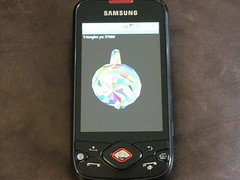 Image by osde8info via Flickr
 The world’s second largest mobile manufacturer, Samsung Electronics, is runners up to the market leader from Finland, Nokia. But Samsung still has to catch up with the conquering popularity of Apple's iPhone and iPad, as Apple retains its control over smartphone and tablet markets with its towering consumer base. However, there is no ambiguity regarding the spearhead technology of Android system which turned the mobile OS market upside down and almost took over the entire smartphone business, Samsung is hoping to have the same results with its tablets as it sticks to the Android OS to power them.
 Image via CrunchBase
The Tegra graphics processor of Nvidia is perhaps technologically the most advance processor in the market of graphics today, especially the Android devices. Recently Nvidia has made the announcement that it is planning to upgrade its already dominant processer for mobile graphics, which will lead the market in future. It was in February, that the initial announcement of the upcoming Kal-El quad-core mobile graphics chip was made publically. Nvidia has released new upgrade regarding the progress of its processor, publishing a demo video displaying the most excellent technology behind Kal-El, allowing it to perform in real-time lighting and physics capabilities on a HoneyComb Android table. This promo video is titled as “GlowBall,” and it shows the features a glowing ball lighting up and moving through a 3D “creepy funhouse” environment. According to the official blog website of Nvidia, its writer, Matt Wuebbling wrote that “this shows off the power of true dynamic lighting, rendered in real-time with physics (no canned animations here, folks),” adding that “this marks the first time this type of lighting is feasible on a mobile device.” Nvidia has measured that its new Kal-El gives almost five times better graphic performance than the preceding Tegra 2 processor, which is already housed in devices like the Samsung Galaxy Tab 10.1 and Motorola Xoom at this time. In contrary to Tegra 2, the Kal-El works on the quad-core processor in the Android device, supplemented by a 12-core graphics processor. The video promo displayed by Nvidia allegedly only shows the GlowBall, but does not reveals whether the chip will be working in real-time: shutting down two of the device’s main processor cores has a dramatic impact on Glowball’s overall performance.


